May, Mary, Mothers

Fr. Francis Di Spigno, OFM,
Pastor
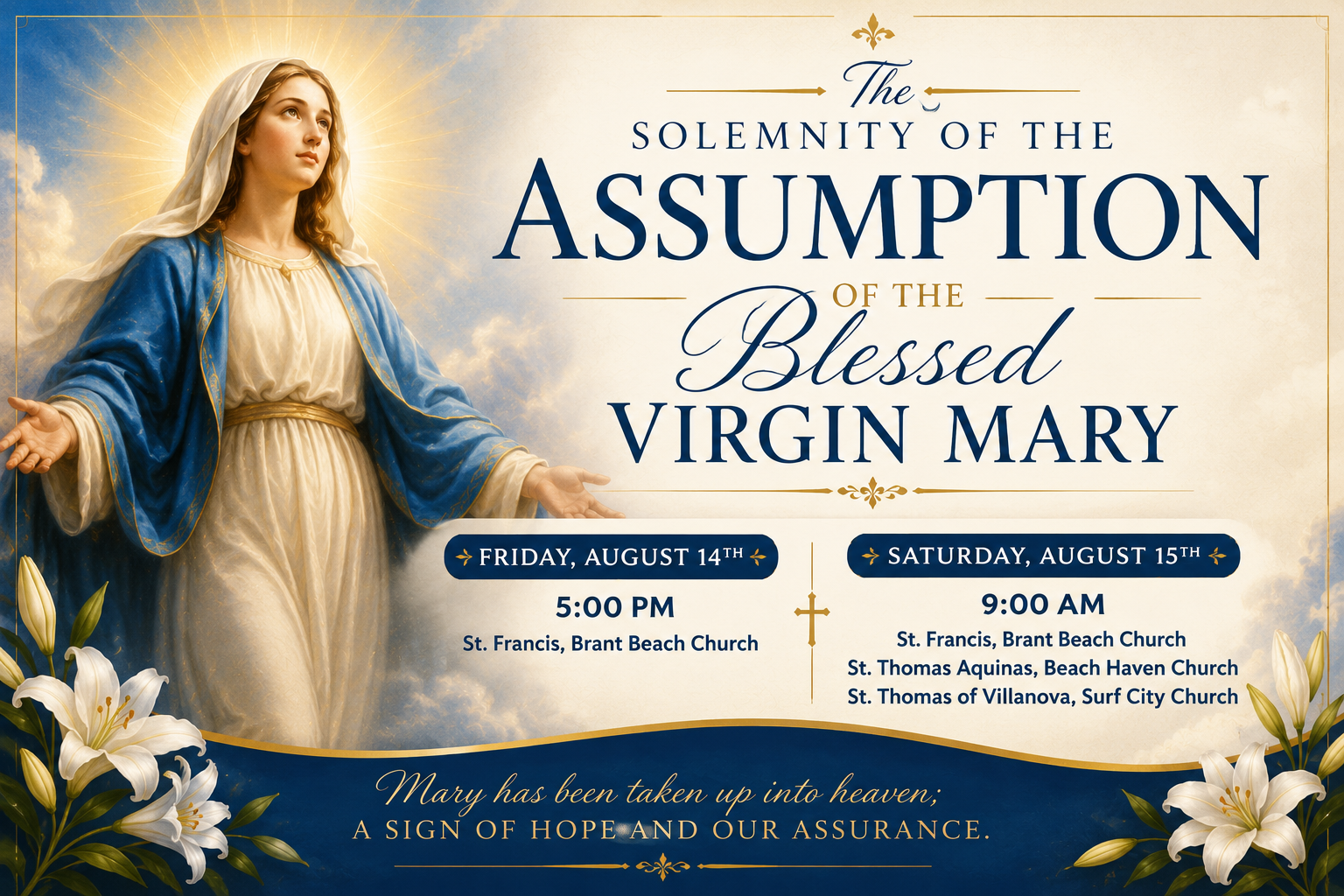
Three of our four churches have the statue of Mary prominently displayed for the month of May. Historically, the dedication of May to Mary dates back to the early church. Our dedication, however, can trace its origin back to ancient Greece and Rome. Within the Greek and the Roman cultures, May was dedicated to goddesses of fertility and spring. As Christianity grew into the religion of the Roman Empire, we reinterpreted many of the cultural customs through the eyes of our Christian faith. The spring fertility dedication was recognized as our dedication to Mary, the Mother of God. The title of Theotókos, in Greek, Mater Dei, in Latin, was formally declared by the First Council of Ephesus in 431 AD.
The custom of offering flowers and singing songs to Mary became part of this dedication during the Middle Ages. In the 18th century, this devotion to Mary became firmly established within the wider church in large part due to the Jesuits promotion the daily Rosary, the crowning of Mary with a corona of flowers, and Marian hymns.
In contemporary times, Pope Paul VI, in his encyclical Mense Maio (1965), wrote: “The month of May encourages us to think and speak in a special way about her. For this is her month. Thus, the time of year when the rhythms of nature inspire renewed hope and joy becomes an echo of the supernatural life that divine grace pours into us.”
In his Angelus address on Aug. 15, 2022, Pope Francis said, “She shows us that heaven is within reach, if we too do not give in to sin, we praise God with humility, and we serve others with generosity.” During a different address on August 24, 2021, Pope Francis called Mary “the first disciple of Jesus” and reminded us that “Mary is there, praying for us, praying for those who do not pray. Why? Because she is our mother.”
We all know that our mothers are uniquely special to us. The origin of Mother’s Day is not nearly as ancient but is certainly connected to our cultural history dating back to the Greek and Roman times.
With the growth of social movements following the American Civil War, Ann Reeves Jarvis, a notable peace activist and community organizer, laid the foundation for what would become Mother’s Day. She established “Mothers’ Day Work Clubs” to foster reconciliation among divided communities. They also focused on public health issues and the welfare of children. It is understood that Ann Reeves Jarvis’ dedication and foresight laid the groundwork of our nation’s deliberate recognition and celebration of our mothers. In 1914, President Woodrow Wilson officially declared the second Sunday in May as Mother’s Day. Mother’s Day is now celebrated in 104 countries.
As we dedicate the Month of May to Mary, our Blessed Mother, we ask God’s special blessing on all of our mothers, godmothers, and all who have been mothers to us. May God continue to bless them with all that is good and holy.
Happy Mother’s Day!

ALSO: